Truth. Accountability. Respect.
Remember these three words. We’ll be coming back to them.
You’ve heard of Weta Digital, the New Zealand digital FX darling behind world-shaking movies like the Rings trilogy. What you might have heard less about is A44 Games, a Triple-I studio forged through sheer force of will by Weta expatriates. Today, I hope to give you a reason to remember their name by sharing one of the best AA games you’ve never played.
Listen to this post on Spotify or Apple, or watch it on YouTube:
We live in a time where “Red vs. Blue” is everywhere. A time where we somehow can’t have a beer with people who vote the other way. We are driven against each other by the insidious and the corrupt, a ceaseless churn that knows no end until we eventually clash and all the sticky red comes out. Our real world is a time of literal marvels, but miracles mean little because we’ve already killed our gods.
Let’s meet Nor and Enki, shall we?
The Hidden Monster and its Devil’s Bargain
You might be wondering if I’m talking about Flintlock: The Siege of Dawn or our world. It turns out, it’s both. Flintlock is a game you need to play because it dredges into the story of conflict. Of what it means to be on one side of a war, and not necessarily the right one. It shows us how we might make allies of our enemies to fight the real monster at the heart of it all. A monster so hidden, so devious, we didn’t even see it until it was too late.
Flintlock’s hero is Nor Vanek, a Sapper by trade, a killer by disposition. She’s ended up in some twat or other’s war, digging her way through a ceaseless tide of corpses, because in her world, the dead walk. It’s not important who’s in charge, because she’s not fighting for them. She cares about one man: a father of sorts, Baz, who starts her on a quest through the simple expedience of going out for milk and never coming back.
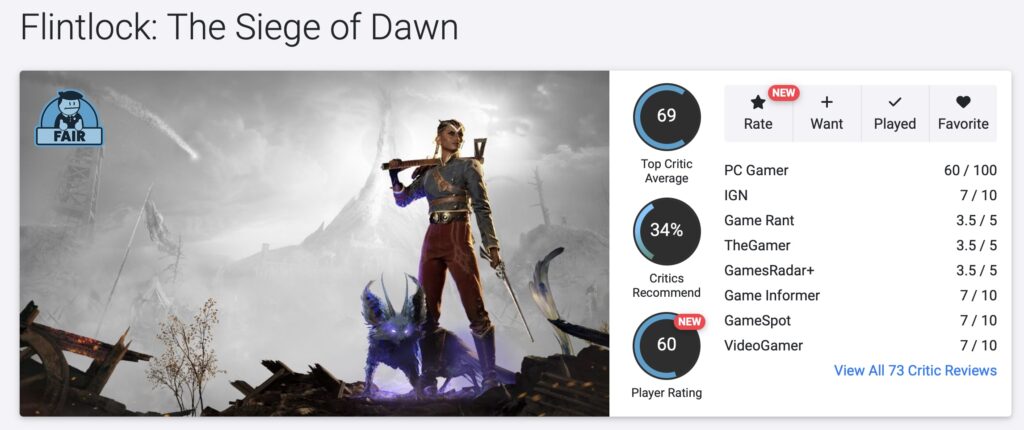
She meets Enki… or should we call him Áánshí? Enki is the diminutive form of the forgotten god Áánshí. He’s a small, almost cute purple-blue fox. Nor swore to kill all gods, and in her time and place, humans have firearms. She aims to put the muzzle against Enki’s skull and blow his brains out. Nor has seen her comrades dead or scattered, and she swears to the Above and against the Below that she will see all gods dead. Enki offers her a different path: ally with him. Join forces, and kill the gods… together. He’s a god with a different perspective, a purpose aligned with hers. His devil’s bargain is tempting, a sweetener that promises Nor the powers of godhood alongside her gunpowder.
This is why we really need to start with Game Pass.
You’ve probably never played Flintlock because A44 Games made a pact with Microsoft: “Put our amazing game on your service. We’ll take your coin, we’ll survive, and through the halo effect of word-of-mouth sales, we’ll be successful.” But they couldn’t have predicted how the market would turn against them. Subscriber counts didn’t convert to sales, and the state of the game on Windows (Microsoft’s home turf!) turned their June 2024 launch into a fireball that was impossible to roll a DEX save against.
The parallels are brutal. In Flintlock, Nor Vanek must ally with Enki to survive, despite gods being the enemy. In the real world, A44 allied with the corporate god of Microsoft to survive. Just as Nor needs Enki’s power, A44 needed Game Pass visibility to escape the indie label.
Gods are fickle allies.
There’s no free lunch. In the game, trusting gods is dangerous. In reality, the Game Pass deal guaranteed players (over 500k) but potentially cannibalised actual sales (around a mere 38k on Steam), leading to a financial failure relative to the budget and resulting in rumoured layoffs.
Both pacts offered short-term survival at the risk of long-term soul-selling. The game launched, and launched badly. I’m here to tell you that you’re missing out. Not only is the game ‘fixed’, it contains one of the most poignant stories that might make you think about who you should have that next beer with, even if you’re a Red and they’re a Blue.
Gods vs Guns
Flintlock, at its heart, is God of War Lite. It carries a souls-lite label, and you can see that if you look sideways at it. There’s a currency like souls. There are things that look like campfires. There are transportation shortcuts you can unlock once you’ve killed all those in your way.
But there’s also a murder playground that’s almost biblical in its purity, a channelling of the dual nature that Kratos and Atreus share in their games. Nor is military, capable enough with a gun, axe, flamethrower, hammer, or whatever’s handy, really. She’s not afraid to shake her fist at the sky. It’s where the bad people are, after all. Enki’s got his own abilities, able to use actual magic, a thing the world hasn’t seen manifested in a long time. Nor is Kratos and Enki is Atreus. And Flintlock plays like a AA version of what Sony’s best has put out — a precision combat murder factory, where multiple builds are viable, and you can change the world with your axe in hand.
It’s not Elden Ring, and shouldn’t be judged as such. The game is a solid 69 — nice — on OpenCritic, but that’s because so many people believed the souls-lite label rather than God of War lineage. What they’ve almost entirely missed is the real story it’s trying to tell, the parable of our time: that it’s possible to forgive the unforgivable, to find your own path when people are telling you to travel to a different destination, and that at the end, you’ll find people you can really count on.
The Weta DNA
The founders of A44 left the golden cage of Weta because they wanted to build interactive worlds, not just look at them. They came equipped with the Kiwi ‘number 8 wire’ mentality, and it was this that let them build a blockbuster on a budget.
They crafted a world that is not just lush, but interesting to actually be in. The towns you liberate aren’t just inanimate skyboxes; they are legitimate places. There is a sublime lived-in feel imbued by the artwork and the atmosphere of the wilderness. You hear a bystander commenting how good it is to be alive and here with the whole family after Nor liberates their hamlet, but “…maybe not with Ma” …and suddenly, it grounds the fantasy. These NPCs have their own backstories and you’ve only just walked into the room.
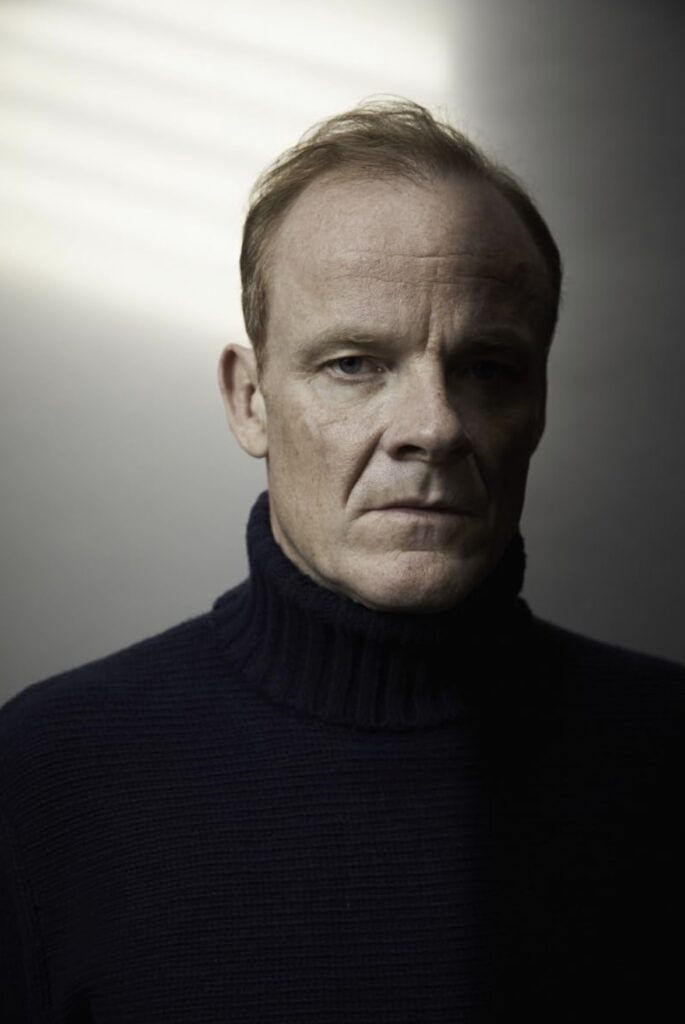
But the real heavy lifting is done by the sound. Olive Gray, who voices Nor, and Alistair Petrie, who voices Enki, are S-tier actors. They use the silence between words to do so much of the work, and yet they aren’t afraid to be soft or loud as the situation demands. And they’re funny! There’s a scene where Enki is trying to teach Nor some godspeak. She can’t get the pronunciation, and in the end, she’s just like, “You know, let’s just leave it.” The way she says it sounds like someone who is pissed off with Enki, herself, and the world at large, and yet… they laugh with each other later. Or there’s that time you find a waterwheel. Enki stops and says he could listen to it until the end of time. Something so ordinary spoke to him at a level we believe because his voice actor made us understand.

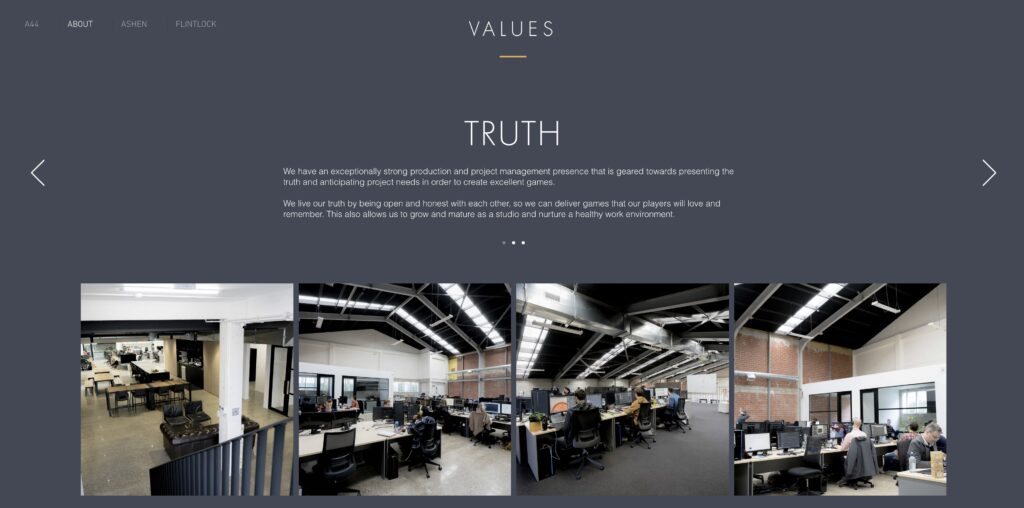
But this isn’t entirely what I mean about the Weta DNA. Remember those words I told you to remember? Truth. Accountability. Respect. These are A44’s values. They’re right there on the website — you can go check. In crafting such a believable story about friends versus enemies, they needed Nor Vanek to be relatable. She needed to command respect. And she needed to hold herself to account for her own actions. It’s a corporate mission statement baked into the code.
And because they needed Nor to be True, they made her distinct. But truth provokes. The internet screamed ‘woke’ because Nor is a Black woman. But the culture warriors missed the point, as they usually do: it’s not her Blackness that’s underlining the issue. It’s her humanity. Her colour defines her position on the board, but her struggle defines her soul. And yet… she’s able to find common ground with people who aren’t Black.
Even with those who look like purple-blue foxes. Her difference makes her perspective relatable, and in this, we believe her. Which is ironic, because our story started with all sides lying to each other. Enki lied to Nor, and Nor deceived her friends, all just to try and get by. It is a startling parallel for our time, but as the credits roll, Flintlock draws you a map to find your better self. One fight, but also one truth, at a time.
The Click
When the game clicks, it is a delight. I expected that last level to be a slog, but no: you feel like a true master of war when set against the paper figures cast against you. I had real Star Wars Jedi: Fallen Order vibes here, when Cal Kestis becomes a Jedi after facing his doubts.
But, also: it’s just damn fun. There was this one sequence in a trench. I rounded a corner and saw a summoner in the distance. This guy is whipping specials out of his ass, and he’s not running low on supplies. I needed to get to them, but they were motivated to not let that happen, spawning what felt like a never-ending tide of mobs. Most were these super fast-moving dudes with aggressive strikes.
But… I’m Nor. I’ve buddied with a god. Which meant I had Enki’s health-on-hit ability, plus the Warlock armour set that spreads curses on death, and talents that returned life when Enki and I struck at the same time. He’s rocking a poison curse effect, and what with the curse’s plague effect, the screen turned into an explosive circus. Sure, I was getting hit, but the stream of health coming back to me was absurd, and the continuous stacking and spreading poison death spiral meant enemies were hurting their friends, basically doing all the work. By the time I got to the mouth of the tunnel, all that was left of the summoner was some greasy ash.
The best the Big Bad could throw was nothing compared to Enki and me. We were justice. We were vengeance! We beat them like a toy drum.
The Reality of Number 8 Wire
That said, it isn’t perfect. And if A44 had pretended they weren’t AA, I’d trust them less.
For example, the cosmetic system uses Reputation (the same souls-like currency you need for skills and weapon upgrades). It’s in short supply, which means unless you’re grinding deliberately, the Flintlock fashion endgame stays locked behind a door you never quite reach. For a game that put so much effort into being stunning, it’s a weird flex that there’s a system designed to stop you engaging with the art team’s work. It will be out of reach for many players.
Then there’s the multiplier mechanic. Play well, murder beautifully, and your Reputation multiplier climbs. It keeps going up the more fabulous you are, but it resets on taking damage. The players who most need the Reputation multiplier to upgrade their gear are the ones struggling in combat. The game punishes them by taking away the thing they most need. It reminds me of the original City of Heroes respec trial: forcing players with broken builds to complete a punishing mission just to fix the build that… prevented them from completing the mission. City of Heroes built the first MMO poverty trap. And while A44 didn’t invent the poverty trap, they didn’t help their players escape it either.
These aren’t flaws that break the game. If you’re a veteran of action RPGs, you might not even notice, but they’re the seams showing a AA budget. The number 8 wire is holding, just… visibly. The casual player invited in by Game Pass might see these issues as a constant, get-rekt reminder that they can’t dodge well enough to earn the upgrade juice or get a dapper jacket. And they’d leave, right before the story grabs you by the heartstrings.
Humanity as a Value Statement
If you stick with Flintlock until the credits roll, you are left with a fairly profound sadness when it’s over. Not because it was too short, but because it delivered on ‘all the feels’.
Despite playing ‘as Nor’, you’re really playing ‘as Nor and Enki’, each going through their own redemption arc. Nor’s purpose isn’t to win for some king on a throne, but to fight for the people to the left and right of her. Enki, for his part, has a more spiritual journey. He’s learning what it means to be human — not in a humanoid body, but in the context of humanity as a value statement. He struggles to understand consequences, and yet once he does, he does so profoundly.
This might even bleed into you. There’s an optional boss, a sort of Stone Guardian guy. He’s a skill check, sure, but he’s also a persistence check. He says, “I’m here to test you.” He’s at the end of a cul-de-sac with nothing behind him but a chest. In the dark quiet of your mind, you have to ask if it’s really worth it to merc this dude. The rewards suggest a pacifist path is just as viable. Is passing the real test killing him, or leaving him alone?
There’s a sidequest I loved. It’s not long, and you don’t have to kill anyone at all. You light fires of remembrance for the fallen in the war. Nor’s reflection on her persistence — or lack of it — in the world is something that will make the player consider: are we just a set of bonfires for others to light in the hope someone remembers a good thing about us? Or are we doomed to obscurity, our mark on the world all for nothing?
It’s Áánshí, Not Enki
We started with Nor and Enki, but in the end, we’re left with Nor and Áánshí. A god, perhaps not a very good one, but trying to be better. He starts as a tiny fox thing, and ends… well, as perhaps a reminder of the best parts of ourselves.
It’s this duo that makes the final scenes so profound. Nor accepts Enki, telling him he’s a sapper first, a god second. Avoiding spoilers, you get to see what this means, and what the implications of his promise to the world are: Áánshí, not Enki, is a god of tremendous power, but also of tremendous mercy. His godhood isn’t as important as his mercy, his compassion, and his humanity.
It’s Nor’s influence that makes him want to save the world, understanding that sacrifice makes a hero, not power. And it’s Enki’s influence on Nor that teaches her that the shape of what we are doesn’t determine who is worth dying for. It’s who we choose to be, and who we choose to become.
And that is why Flintlock — Game Pass faceplant and all — is more than just content you rent for a month. It’s a testament to the middle market, and a story worth owning, and perhaps a story worth feeling.
If you like the idea of diminutive purple foxes who become titanic gods of righteousness, hit the Like button. And if you think we should spend a little more time focusing on our humanity (and a little less on corporate devil’s bargains), Subscribe. And thanks for watching!
Discover more from Parrydox
Subscribe to get the latest posts sent to your email.